Overview
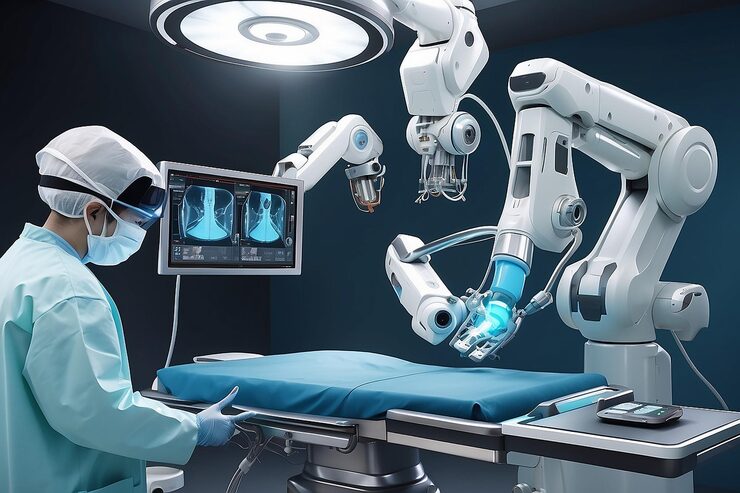
The healthcare landscape is changing predictably; artificial intelligence (AI) and robotic surgical systems are at the forefront of this increasing collaboration. These technologies are no longer on the horizon they are defining the way surgeries are being planned, executed, and monitored today. From minimally invasive robotic surgery to AI-based planning of surgery and real-time data analysis in the operating room, patient care is reaching new standards of safety, accuracy, and efficiency.
The Era of Robot-Assisted Surgery
Robot-assisted surgery sounded like science fiction a decade ago. It is now routine practice in highly specialised medical treatments involving cardiology, neurology, urology, and orthopaedics. Robotic surgery systems like the da Vinci surgical system allow surgeons to perform surgeries more precisely and controlled through tiny incisions. So, it allows patients to recover sooner and have less chance of any problems from the surgery.
AI is really boosting our ability to predict outcomes, and it’s super helpful for diagnosing medical images. Now, surgeons can count on these cool machine learning programs to spot patterns, flag potential risks, and suggest the best ways to tackle surgery. When you mix that with robotics, it leads to a smarter, more accurate, and patient-centred way to do surgery.
Main AI and Robotics Gains of Contemporary Surgery
1. Surgery of unmatched precision.
In robotic surgery that is minimally invasive, AI technology allows surgeons to carry out highly sophisticated movements of sub-millimetre accuracy. Robotic limbs are engineered to eliminate bodily hand tremors and allow fine motion that is unattainable by humans alone. This precision results in safer reduction of risk of bleeding, secondary infection, or tissue damage.
2. Rapid recovery and less time spent in hospital.
Smaller incisions mean less collateral damage to the body, which results in less perioperative pain, less scarring, and earlier hospital discharge. Compectomies are generally feasible long before even traditional open operation is carried out.
3. Extended preoperative planning.
Computer-aided surgical planning technology allows a surgeon to review in-depth imaging scans to design 3D surgical plans. Virtual simulations enable surgeons to prepare to deal with any potential complication they may encounter before entering the OR, so that surgery is safer as well as faster.
4. Real-time information and decision support systems.
The moment the surgeon goes into the surgical suite, real-time surgical monitoring systems that use AI are tracking signs in the surgical patient from multiple sources, including imaging and surgical instruments. They may allow alerts to the surgeon about unexpected changes, make recommendations, or even predict complications before they occur.
5. Individualised Treatment and Better Outcomes
Incorporating machine learning into robotic surgery allows tailoring of personalised plans of treatment that are controlled by data from an individualised patient's electronic health records, imaging studies, and genetics. Each patient is assured a personalised type of care that is appropriate to their own disease profile.
Advanced Applications in Surgical Specialities
Robotics and AI are increasingly being employed in several specialities of surgery, including:
- Cardiothoracic Surgery: Surgical correction of heart valves and coronary artery bypass surgery through robotic assistance is becoming commonplace, allowing high-accuracy surgery through a minimal number of chest incisions.
- Orthopaedic Surgery: Robotic-assisted joint replacement surgery coupled with AI can guarantee perfect positioning of implants, which increases the range of motion and longer the longevity of the prosthetic joint.
- Neurosurgery: It is all about using robotic surgery for the brain and spine, right? It lets doctors do procedures super accurately, which is huge because even tiny mistakes in those areas can lead to some serious problems.
- Cancer Surgery: AI-powered improved imaging helps surgeons differentiate between malignant and normal tissue to reduce recurrence potential and protect healthy organs.
The Contribution of AI to Surgical Innovations
Artificial intelligence is helping surgeons but is also enabling predictive medicine. Smart algorithms scrutinise past patient data to predict the risk of surgery and probable time of recovery. And AI can even spot subtle signals in investigations like images, that can delineate preliminary changes in health and suggest preventive surgery sooner.
Another field that is increasingly growing is that of robotic surgery, which allows robotic systems to work alone to some extent without a surgeon to conduct some processes. Though technology currently does not allow work to be done autonomously completely, a day will come when robotic systems will be able to work autonomously to conduct cases more efficiently and effectively.
Reporting Problems and Staying Safe
Despite such immense advantages of robotic and AI integration in surgery, the implementation of the same is marred by difficulties. Costs of robotic systems of surgery, training of special skills required, and cybersecurity, along with data protection, are of prime concern. Hospitals must invest in all-inclusive training modules to make surgeons and OR staff capable of effectively utilising such cutting-edge instruments. Even governing authorities are putting strict rules into place so that AI-based instruments of surgery meet all maximum standards of protection.
The Robotics and AI of Tomorrow: Shaping Patient Care
The future of AI and robots in surgery is super exciting! With all the tech advancements happening, we can expect some cool next-gen robotic surgery tools that have way better feedback, smart AI that learns on its own, and easy connections with real-time imaging and telemedicine. This stuff won’t just make surgeries more precise; it’ll also help get top-notch surgical care to people all over the world, even in hard-to-reach places, thanks to AI-assisted remote robotic surgery.
Surveillance systems after surgery driven by AI will get better, so we'll be able to identify issues sooner and give a rehab plan that is more personalised. This is not only going to enable hospitals to have low numbers of readmits but will lead to better long-term results for patients.
In Summary:
The integration of robotics and artificial intelligence in current practice in surgery is enhancing patient care in several phases of healthcare provision, namely surgical pre-planning and accuracy, protection and recuperation, and follow-up following operation. Surgical planning will be a beneficiary of artificial intelligence, robotic-enabled minimal access surgery, and the availability of data-informed real-time feedback, so that the patient experiences safer surgery with shorter hospital stays and improved health results in general.
As medicine becomes increasingly practised with these technologies, surgery reform will ensue, and medicine will forge onward into precision medicine, smart automation, and patient-focused care. Not only is combined artificial intelligence and robotics transforming the operating room, but it is also reconstructing a new future of global health care wherein innovation translates to a better life for patients.